
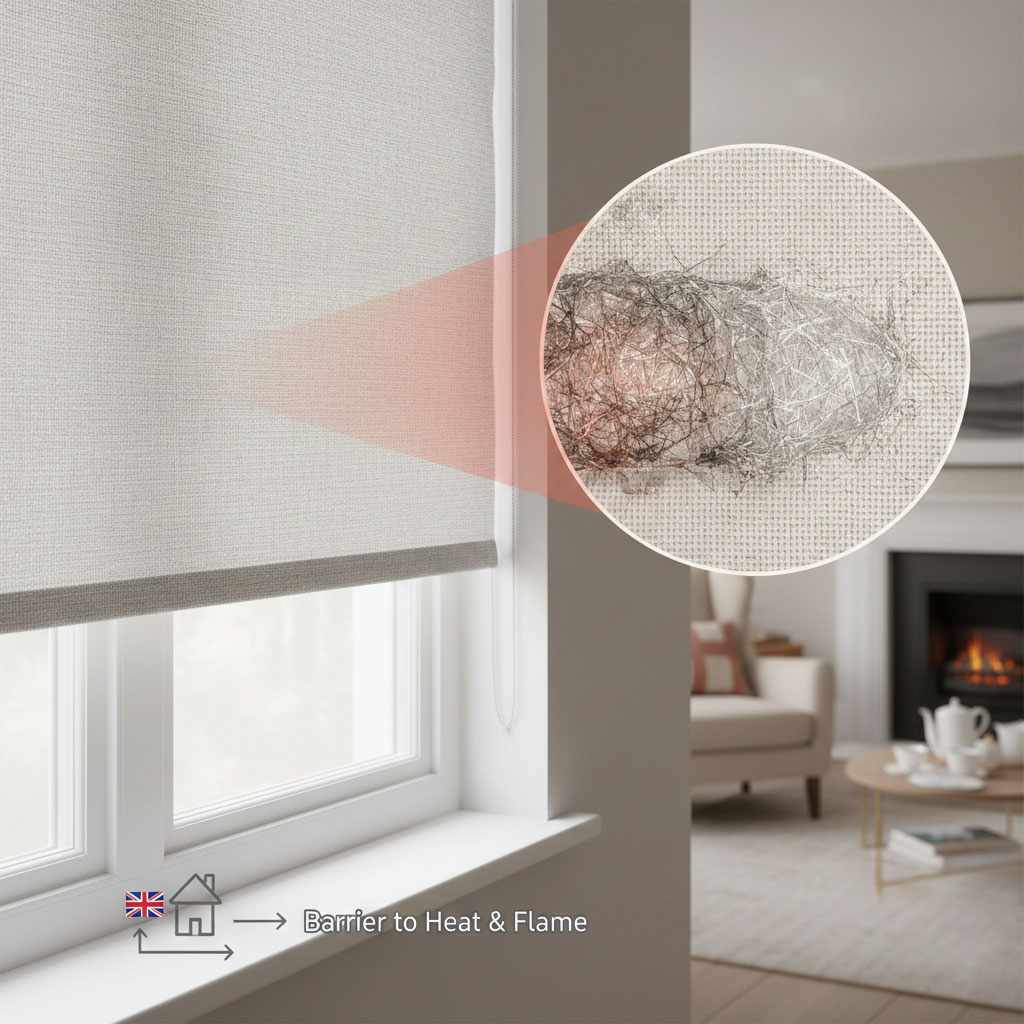
Fire safety is a crucial consideration for UK homeowners, and window treatments play a surprisingly important role. Blinds made from fire-retardant materials can help slow the spread of flames, giving you more time to evacuate and reducing potential property damage.
Understanding how these blinds work and whether they are necessary for your home can help you make an informed decision to protect your family and property.
How Fire-Retardant Blinds Are Designed
Fire-retardant blinds are manufactured to resist ignition and limit the spread of flames.
- Special fabrics or coatings are used to make them less flammable than standard materials.
- Compliance with British Standards (BS 5867-2) ensures tested levels of fire resistance.
- Durable construction prevents rapid melting or burning.
These design features do not make the blinds fireproof, but they significantly reduce the risk of flames spreading quickly across windows, which are often vulnerable points in a fire.
Benefits of Installing Fire-Retardant Blinds
Installing fire-retardant blinds offers several practical advantages for homeowners.
- Slows the spread of fire, giving occupants more time to evacuate safely.
- Reduces smoke damage, as treated fabrics emit fewer toxic fumes.
- May lower insurance premiums, as some providers offer incentives for fire-safe home features.
By investing in fire-retardant blinds, homeowners can enhance overall fire safety without compromising style or interior design. These blinds are particularly valuable in kitchens, living areas, or rooms with electrical appliances where fire risk may be higher.
Types of Fire-Retardant Blinds Suitable for UK Homes
Several styles of blinds are available with fire-retardant properties to suit different interiors.
- Roller blinds: Available in fire-resistant fabrics for a minimalist, modern look.
- Vertical blinds: Ideal for larger windows or patio doors, with treated PVC or aluminium slats.
- Roman and cellular blinds: Soft fabrics treated to meet fire safety standards, combining aesthetics and protection.
Homeowners in Edinburgh and across the UK can choose blinds that complement their décor while meeting safety requirements, making it easier to incorporate fire safety into everyday living.
Regulatory Considerations for Fire-Retardant Blinds
Certain buildings and situations in the UK legally require fire-retardant window coverings.
- Public buildings and commercial properties often must meet specific fire safety regulations.
- High-rise residential buildings in the UK may require treated fabrics to reduce fire risk.
- Local council guidance can provide advice for renovations or new installations.
Being aware of regulations ensures that homeowners comply with safety standards and avoid potential legal or insurance issues. Even in private homes, following best practises is a sensible precaution.
Practical Tips for Maintaining Fire-Retardant Blinds
Maintaining these blinds correctly helps preserve their fire-retardant properties over time.
- Avoid harsh cleaning chemicals that may degrade protective coatings.
- Regularly inspect blinds for signs of wear, damage, or fraying.
- Follow manufacturer instructions for safe installation and upkeep.
Proper care ensures the blinds remain effective and continue to provide safety benefits throughout their lifespan. Regular attention also prolongs their aesthetic appeal and functionality.
Enhance Safety Without Compromising Style
Fire-retardant blinds offer a practical and stylish solution for increasing fire safety in UK homes. By understanding how they work, choosing the right type for your property, and maintaining them correctly, homeowners can protect their families and property from potential hazards.
Investing in fire-resistant window coverings is a simple yet effective way to combine safety, comfort, and design, giving peace of mind to every room in your home.
