
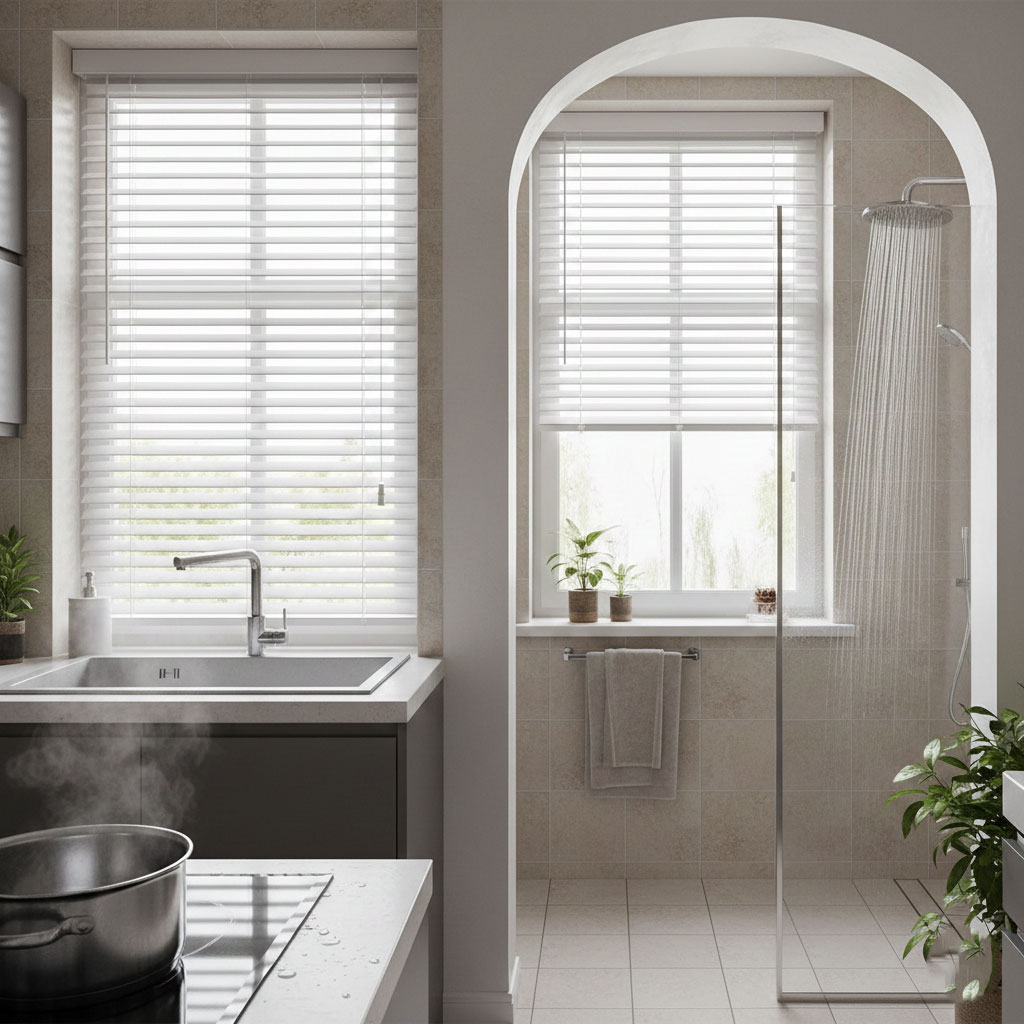
Bathrooms and kitchens in UK homes are naturally exposed to high levels of humidity and moisture. Traditional blinds can quickly suffer from warping, mould, or staining in these environments, reducing their lifespan and appearance.
Choosing moisture-resistant blinds is essential for keeping these rooms functional, hygienic, and stylish while ensuring your investment lasts for years.
Understanding Moisture-Resistant Blinds
Moisture-resistant blinds are specifically designed to withstand damp conditions without deteriorating.
- Made from PVC, aluminium, or treated fabrics that repel water and prevent warping.
- Resistant to mould and mildew, which is vital in steamy bathrooms or kitchens.
- Durable and easy to clean, allowing regular maintenance without damage.
These blinds provide a practical solution for rooms prone to condensation, combining functionality with a clean and polished appearance. Investing in moisture-resistant options ensures that your window treatments remain attractive and durable over time.
Benefits for Bathrooms and Kitchens
Moisture-resistant blinds offer multiple advantages beyond just withstanding dampness.
- Hygienic design prevents the growth of bacteria and mould, keeping the environment safe.
- Low maintenance, requiring only a wipe-down rather than extensive cleaning.
- Enhanced durability, reducing the need for frequent replacements in wet environments.
Installing these blinds allows homeowners to maintain a fresh, safe, and stylish space without worrying about water damage, making them ideal for high-moisture areas in UK homes.
Suitable Materials for Moisture-Resistant Blinds
Several materials are particularly suited to moisture-prone areas, giving both practicality and style.
- PVC blinds: Highly water-resistant and easy to clean, perfect for small kitchens and bathrooms.
- Aluminium blinds: Lightweight, rust-resistant, and ideal for modern interiors.
- Fabrics with water-repellent coatings: Soft-touch options that resist stains and humidity.
Selecting the right material ensures your blinds function effectively in humid environments while complementing your décour. Each option offers different textures, colours, and styles to match your interior design preferences.
Practical Tips for Installation
Correct installation helps moisture-resistant blinds perform optimally in kitchens and bathrooms.
- Keep blinds away from direct water splashes to prolong their lifespan.
- Ensure adequate ventilation in the room to reduce excess condensation.
- Use brackets and fittings designed for humid environments to prevent corrosion or loosening.
Proper installation and placement maximise both the effectiveness and durability of moisture-resistant blinds, ensuring long-term performance in everyday conditions.
Maintenance Advice for Longevity
Even moisture-resistant blinds require some care to maintain their quality and appearance.
- Regularly wipe down surfaces with a damp cloth to remove moisture and grease.
- Check for signs of mould or mildew and clean immediately using mild, non-abrasive cleaners.
- Avoid harsh chemicals that may damage protective coatings or fabrics.
Routine care not only keeps the blinds looking new but also ensures they continue to provide resistance against moisture, maintaining both hygiene and style in your home.
Maximise Comfort and Durability in Moist Rooms
Moisture-resistant blinds are the ideal choice for UK bathrooms and kitchens, providing durability, hygiene, and ease of maintenance. By selecting suitable materials, following installation best practises, and maintaining them correctly, homeowners can enjoy stylish, practical window treatments that withstand the challenges of damp environments.
Investing in moisture-resistant blinds enhances comfort and ensures your kitchen and bathroom remain functional, fresh, and attractive for years to come.
