
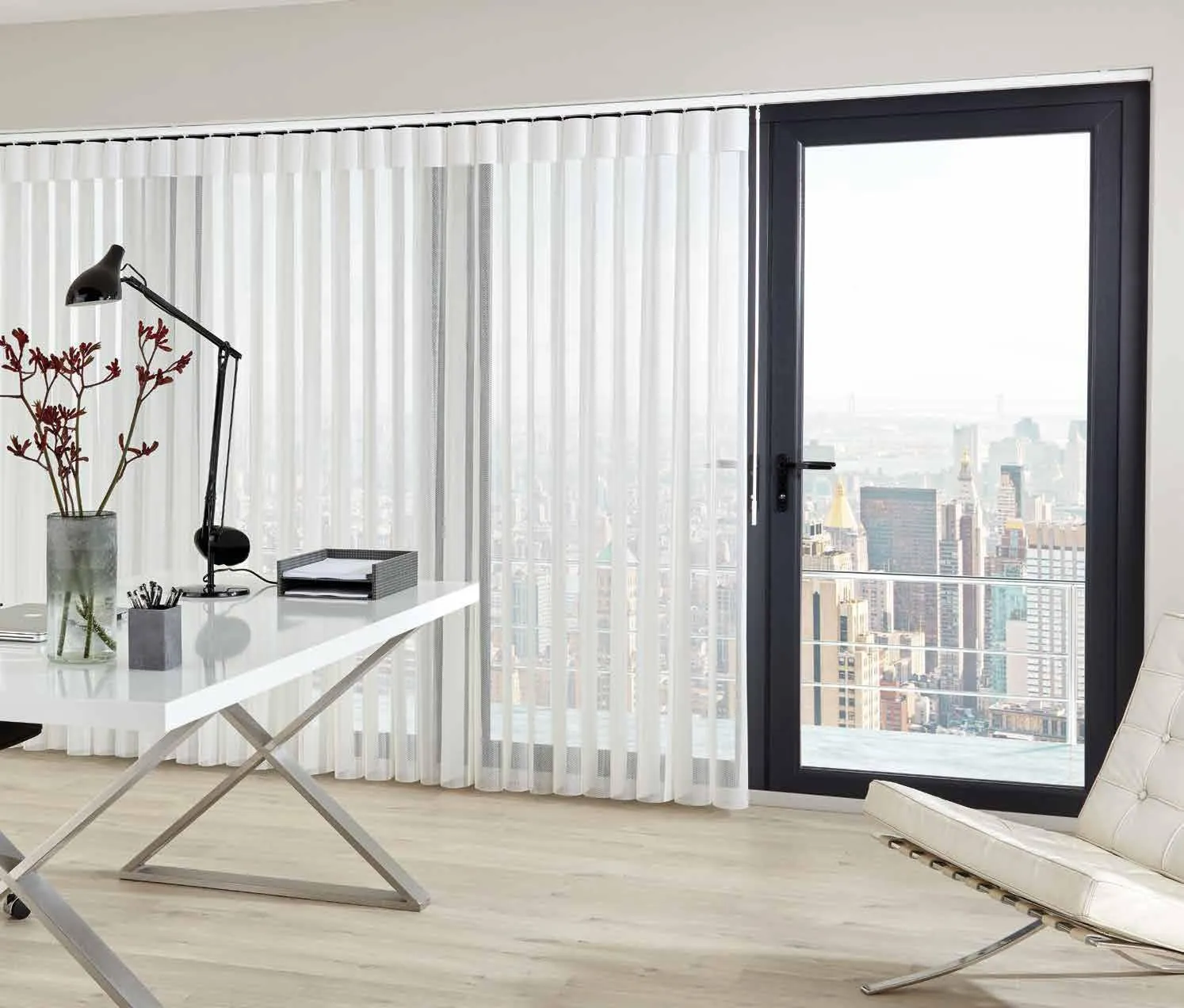
Large windows, bi-fold doors, and floor-to-ceiling glazing are stunning architectural features that define many modern UK homes, yet they present a unique challenge when it comes to privacy and thermal efficiency. Finding a window dressing that manages significant light levels without becoming cumbersome or aesthetically overwhelming is essential for maintaining a comfortable living space.
While both vertical and roller blinds offer sleek, functional solutions, their mechanisms and visual impact differ considerably. Selecting the right option depends on your specific priorities—be it fine-tuned light control, ease of maintenance, or a minimalist finish that complements your interior design.
Light Control and Privacy Precision
Vertical blinds are often the gold standard for large windows because they offer unparalleled versatility in managing sunlight. By tilting the individual louvres, you can deflect harsh glare while still maintaining a view of the garden and allowing natural light to filter into the room.
- Rotating Louvres: 180-degree rotation allows you to follow the sun’s path throughout the day.
- Privacy Levels: Ideal for street-facing windows where you want to block the view of passers-by without sitting in the dark.
- Shadow Play: Creates beautiful linear light patterns that add depth to a room.
Whether you are working from home and need to stop screen glare or simply want to protect your furniture from UV fading, the adjustability of verticals is a significant advantage. They provide a dynamic solution that reacts to the changing British weather.
Suitability for Access and Movement
If your large window is actually a patio door or a set of bi-folds, the way the blind opens is just as important as how it looks. Vertical blinds operate on a headrail that allows the fabric to be drawn back to the side, much like a curtain, which is often more practical for high-traffic areas.
- Side Bunches: Can be designed to “split draw” from the centre or “narrow bunch” to one side to keep doorways clear.
- Walk-through Ease: Gravity ensures the slats fall back into place if someone passes through them.
- Weight Distribution: The weight is spread across a track, making it easier to operate on very wide spans than a single heavy roller.
Because they move horizontally, vertical blinds don’t require you to lift the entire weight of the fabric to access your door handle. This makes them a more ergonomic choice for elderly users or homes with busy indoor-outdoor transitions.
Aesthetics and Interior Style
Roller blinds are the go-to choice for homeowners seeking a minimalist, contemporary aesthetic. When fully retracted, they occupy very little space at the top of the window, leaving your view completely unobstructed and maintaining the clean lines of the room.
- Seamless Fabric: Provides a single, uninterrupted piece of material that acts as a canvas for bold colours or patterns.
- Compact Footprint: Tucks away into a neat roll or a sleek cassette box for a “barely there” look.
- Modern Finishes: Available in high-end textures, from faux-suede to metallic weaves, that feel more like a design feature than a utility.
If your goal is to showcase the architecture of the window itself, the roller blind stays out of the way until it is needed. It provides a crisp, tidy appearance that suits the “less is more” philosophy of modern UK renovations.
Maintenance and Durability
In a busy household, durability is a non-negotiable factor, especially for large surface areas that collect dust or face heavy use. Vertical blinds are generally more resilient to dust build-up because the slats hang vertically, meaning there is less surface area for particles to settle on.
- Individual Slat Replacement: If one louvre gets damaged or stained, you can replace a single strip rather than the whole blind.
- Moisture Resistance: Many vertical options come in PVC or easy-wipe finishes, perfect for large kitchen-diners.
- Roller Tension: Large rollers can sometimes suffer from “telescoping” (fraying at the edges) if not perfectly aligned; verticals avoid this issue.
While roller blinds are easy to wipe down, a large expanse of fabric can be a magnet for dust and pet hair. Verticals offer a “modular” benefit that makes them a cost-effective long-term investment for expansive glazing.
Thermal Efficiency and Insulation
Large panes of glass are notorious for heat loss in winter and solar gain in summer. Both blind types can be fitted with performance fabrics, but their effectiveness depends on how they cover the glass.
- Blackout Linings: Roller blinds are excellent for bedrooms as they provide a solid block of fabric with fewer light gaps.
- Solar Reflective Coatings: Many vertical slats feature a “SPC” (Solar Protective Coating) to bounce heat back outside.
- Snug Fit: Rollers can be fitted close to the glass to create a small air pocket that helps with insulation.
Ultimately, if your primary concern is keeping a room warm during a British winter, a heavy-duty roller blind with a thermal backing may offer a slightly better seal. However, for managing heat during a summer heatwave, the airflow permitted by tilted vertical slats is often more comfortable.
Making the Final Decision for Your Home
The choice between vertical and roller blinds usually comes down to how you use your space. If you have a wide sliding door and need to nip in and out regularly while keeping the sun out of your eyes, the vertical blind is the undisputed champion of functionality.
On the other hand, if you want a sleek, “Instagram-ready” look for a large static window and value a completely clear view during the day, the roller blind will provide that sophisticated, high-end finish. Take a moment to consider your daily routine—whether it’s the ease of cleaning, the precision of light, or the simplicity of a single pull—and you will find the perfect match for your home’s largest features.
